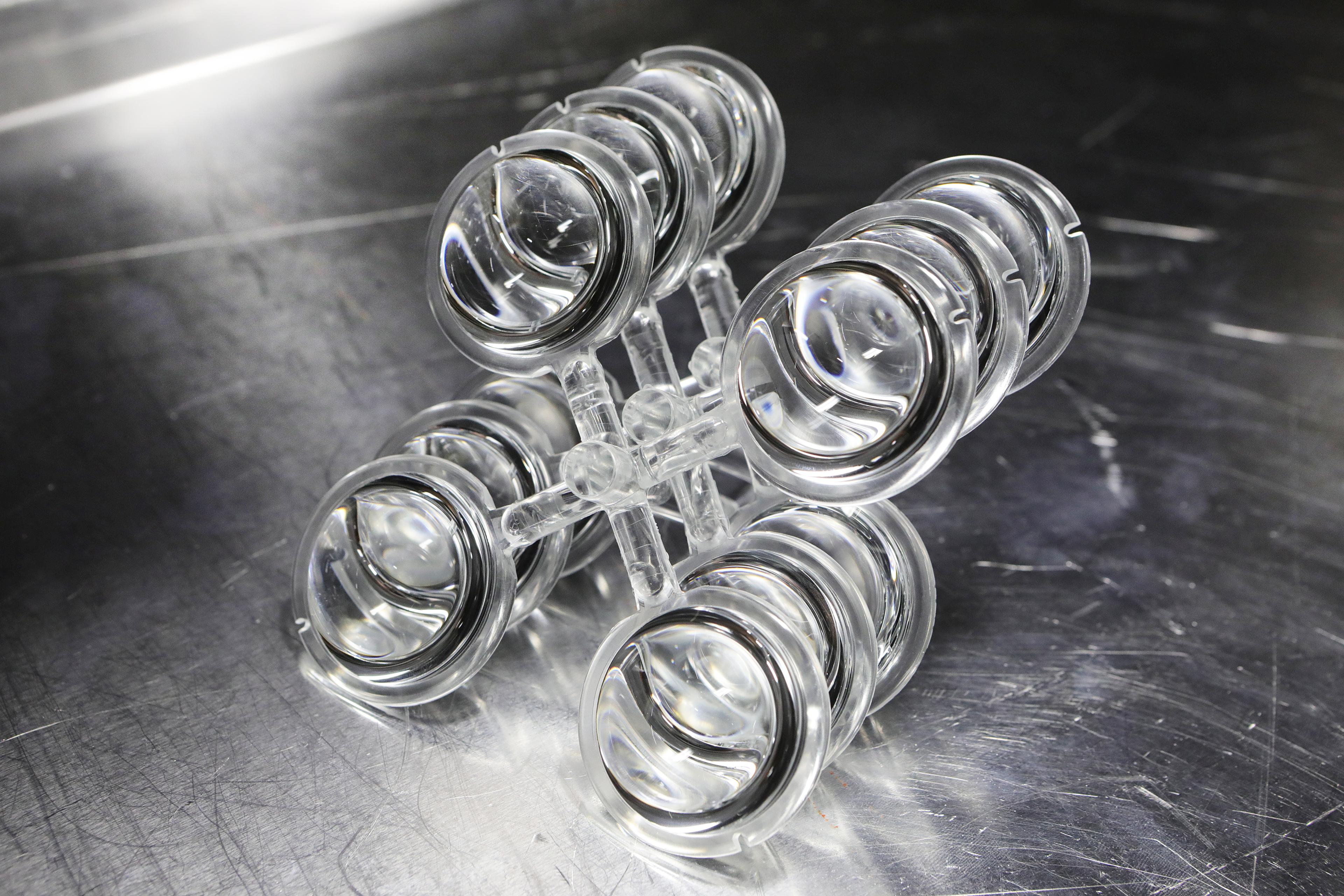
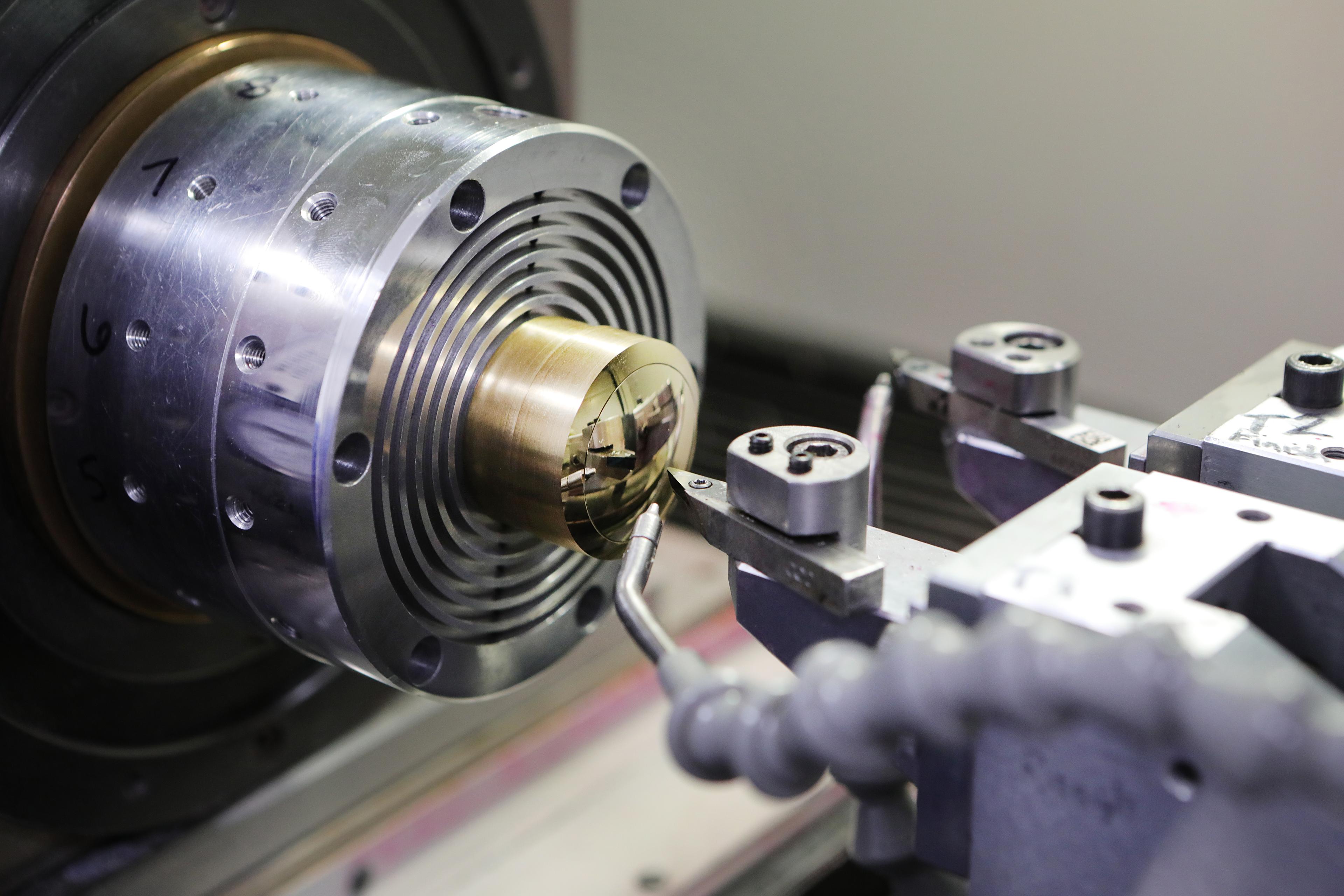
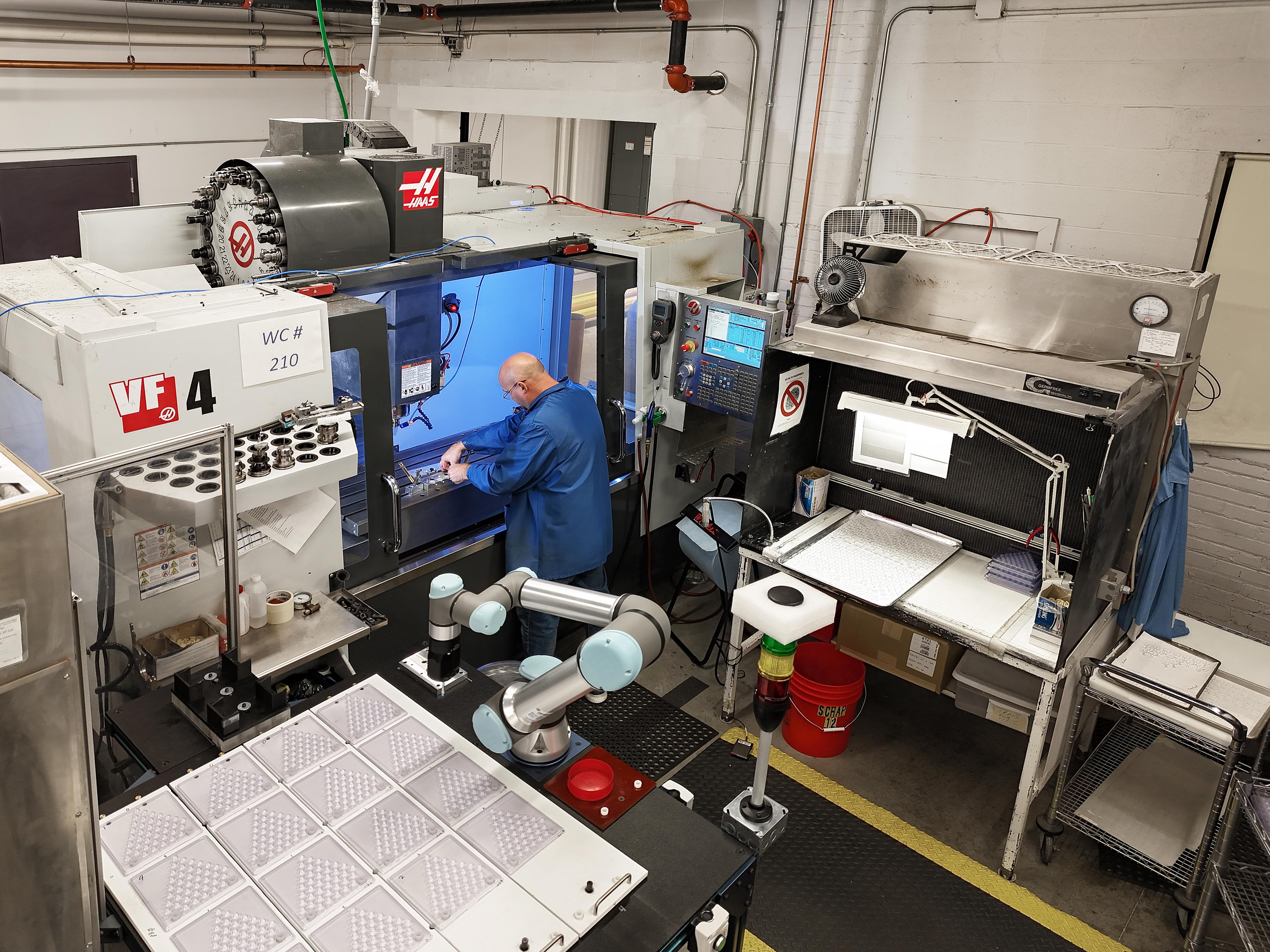
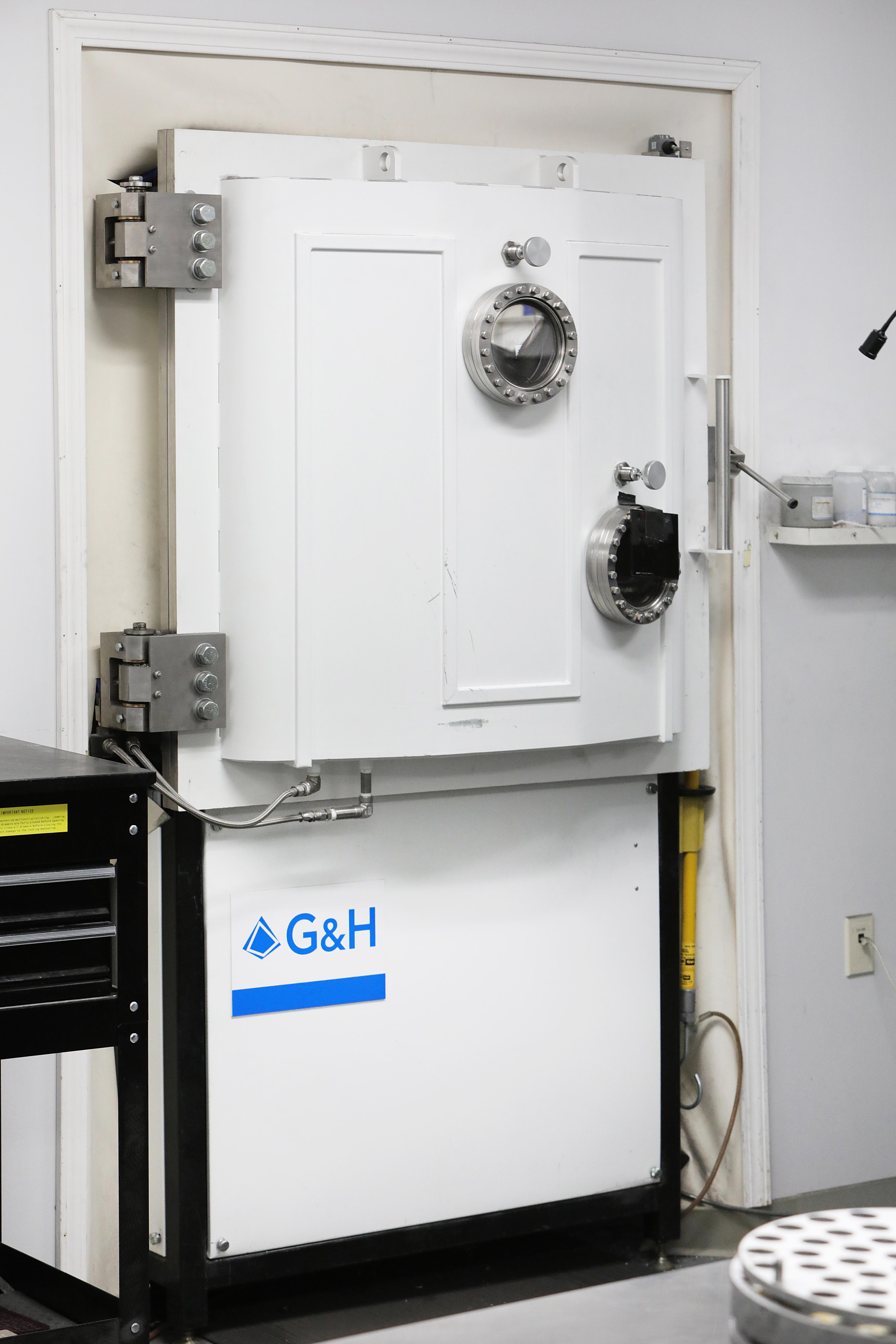
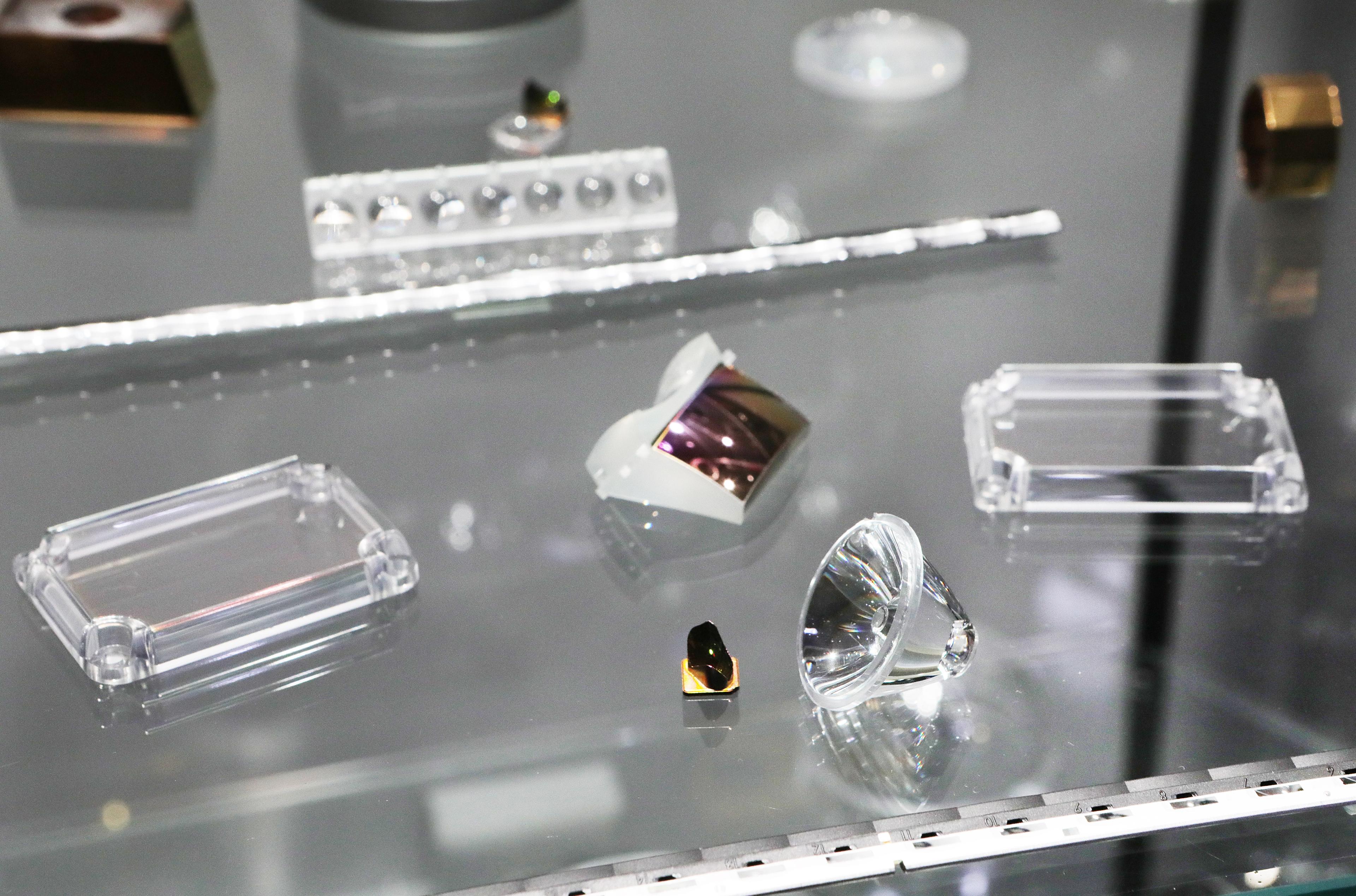
Custom-designed polymer optics are highly engineered and manufactured components that are quite often the key platform enabler. As such, the design requires significant planning and forethought to ensure all risk criteria are considered and minimized. The entire design should be reviewed for manufacturability, therefore working with a company possessing significant background in optical injection molding is highly recommended.
The G&H | GS Optics engineering and production staff are seasoned professionals possessing the knowledge to ensure all risks are recognized and minimized prior to project kickoff. Our in-house team of experts will provide guidance with optics, mechanical design, design for manufacturability, single-point diamond turning, injection molding, thin film coating, assembly operations, and metrology to ensure your program moves from concept to market in minimal time and on budget.
Project Status
G&H | GS Optics understands the necessity of keeping the client fully informed of project status throughout the lifecycle. We adhere to optical device project management methods and strategies in order to reduce cycle times, cut costs, optimize quality, and ultimately improve success rates for the client. Project management actually begins at the moment the first contact is established.
Fit Assessment
Shortly following initial contact, Sales and Applications staff will perform a fit assessment with the client’s staff. We will develop a firm understanding of the project scope including technical requirements, budgetary requirements, time-to-market expectations, and deliverables. This information is critical to ensure that G&H | GS Optics is a good fit for the project and that we can meet the client's delivery expectations.
Design for Manufacturability
Once we determine the project is a good fit, we immediately review the design for manufacturability. We work closely with our clients to ensure the intended design is possible through in-house manufacturing techniques. All design concerns will be worked out with the client before moving forward while keeping time-to-market a priority. Once a manufacturable design is achieved, G&H | GS Optics will provide a comprehensive proposal covering the client's business requirements and the proposed solution to achieve those requirements.
Contract Review
Following a bid award, we perform a contract review with all project stakeholders to ensure the scope and schedule are still in line with the proposal. A project manager is assigned at this time to direct all further optical device project management. This individual will be your point of contact throughout the project life-cycle, up to Production turnover. The project manager will keep your staff fully informed of all project milestones through regularly scheduled project briefings. These meetings will be facilitated by the project manager, however, all stakeholders including Sales, Engineering, Quality, and Production will be in attendance as necessary. If the project scope warrants, a project plan will be developed in Microsoft Project and a corresponding Gantt chart will be maintained and updated regularly for quick, visual reference of the project status.
Product Inspection
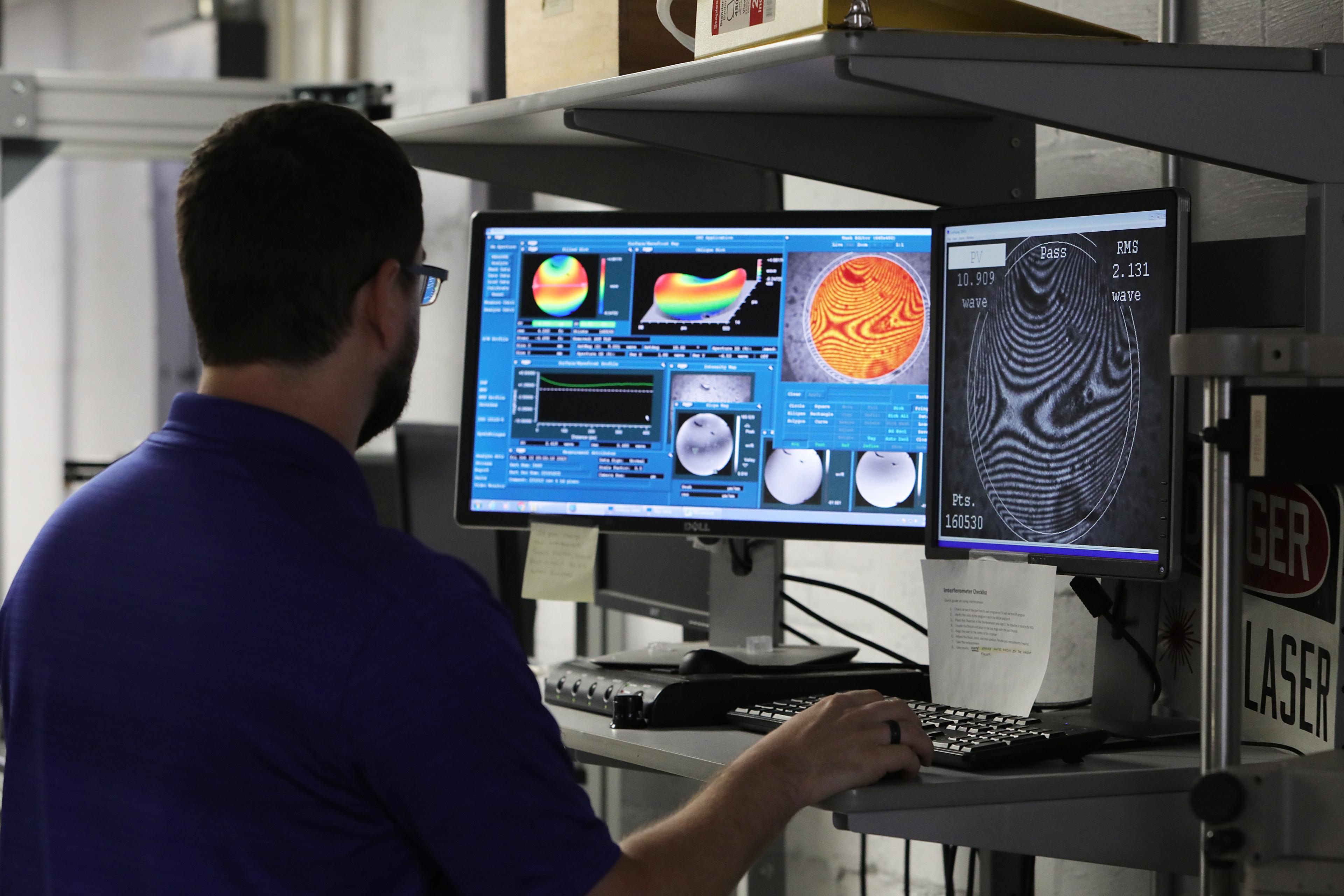
The most common method of quality assurance is product inspection. For an optic, this typically involves mechanical measurements and optical testing.
- Plano and spherical surfaces can be tested with an interferometer which provides a very high level of precision.
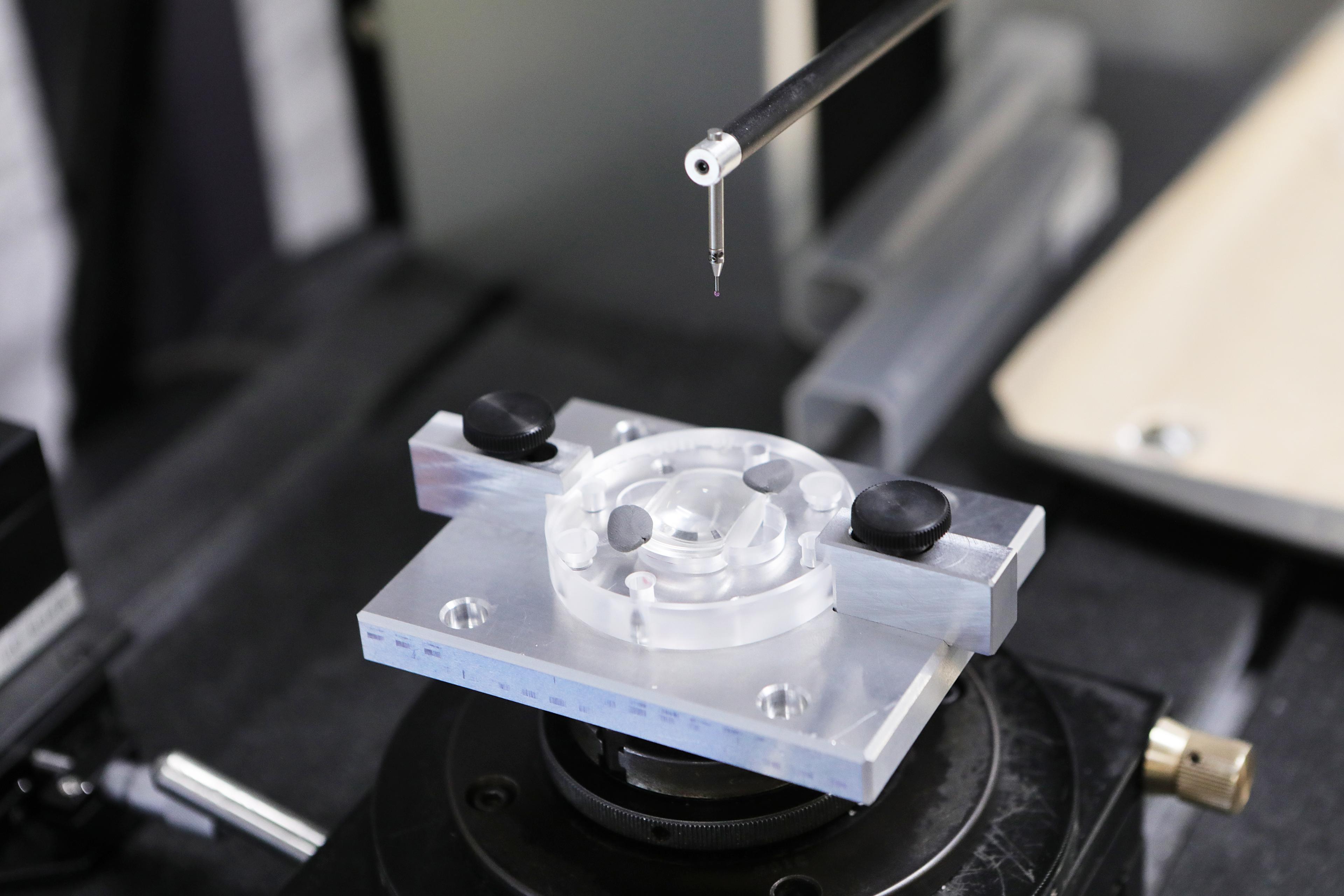
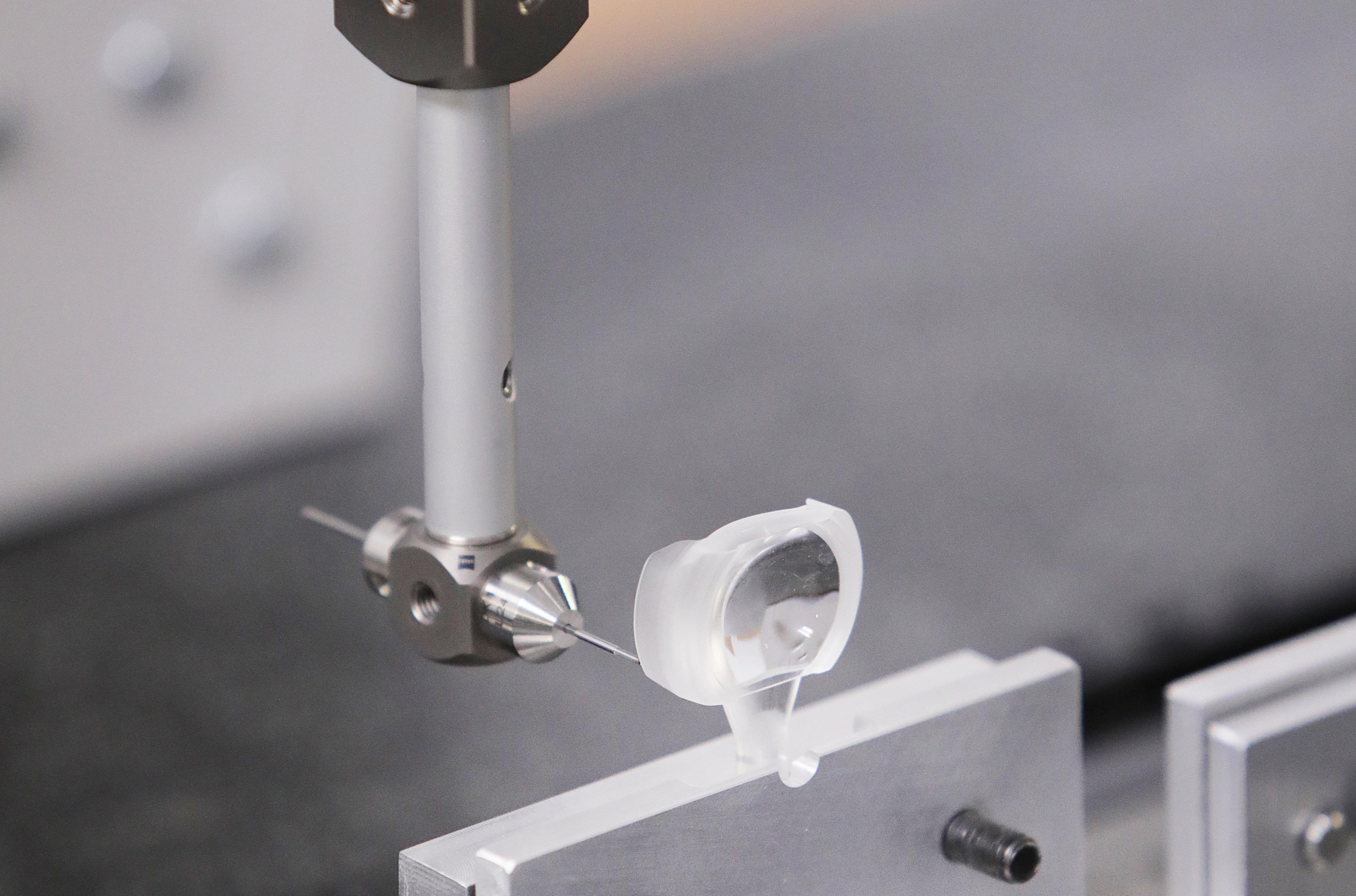
- Aspheric and free-form surfaces can also be measured interferometrically with custom-built holographic nulls which are required to perform the testing. For most programs manufacturing holographic nulls would be prohibitively expensive. Instead, a profilometer and/or Coordinate Measuring Machine (CMM) can be successfully used for testing aspheric and free-form surfaces.
- Surface roughness is typically tested with a white light interferometer.
Functional Testing
A vendor can also perform functional testing. This involves verifying optical performance characteristics, such as focal length, MTF, or light distribution.
Setups for functional testing are typically built with customer input to simulate as closely as possible the part’s performance in an actual system. The advantage of this method is that it allows rapidly verifying parameters critically important to the part’s function without physical measurements that may damage the tested part.
Sampling
For high-volume production, inspection is typically performed on a sampling basis.
- To qualify a new mold, first article samples (FAS) are produced and tested. The test results are presented to a customer for approval prior to starting high-volume production.
- A common practice for production injection molding is measuring samples from each new startup and then every four hours during the production run.
Process Validation
Another important function of a quality assurance system is process validation to verify that the manufacturing process is stable and repeatable.
- This typically starts with Installation Qualification (IQ), a verification that process equipment and ancillary systems have been installed according to the manufacturer’s recommendations and are consistent with the equipment ordered.
- The next step is Operational Qualification (OQ), a verification that equipment operates as intended in accordance with pre-established limits and tolerances, procedures, and specifications.
- The final step is Performance Qualification (PQ), a verification that a process is effective and reproducible.
Assembly
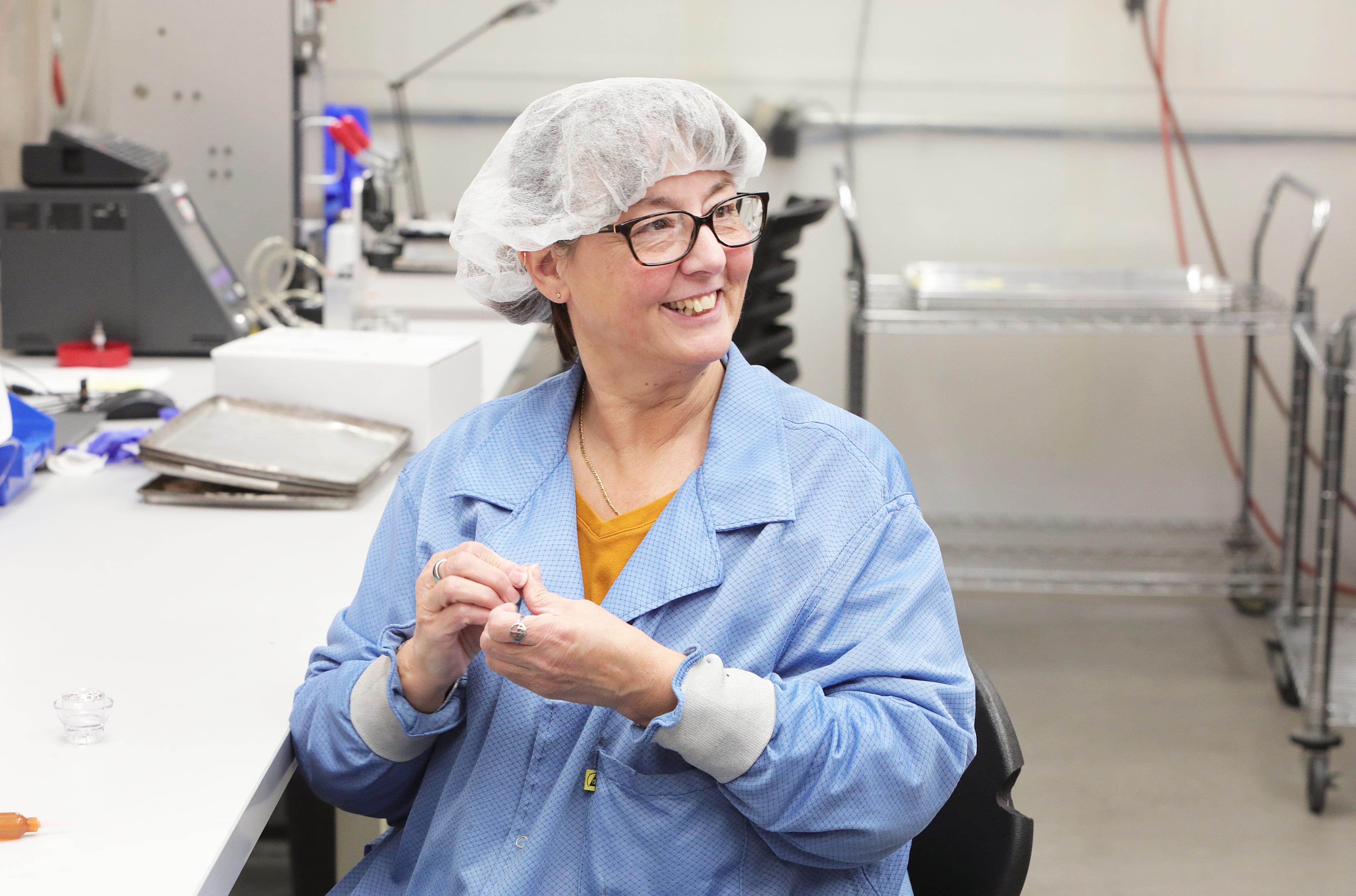
We provide complete optomechanical assembly services within our Class 10,000 (ISO Class 7) clean room. Our manufacturing engineers understand the delicate nature of optical assembly and we have the ability, experience, and equipment to ensure assembly meets specifications. Our staff will include assembly considerations during the DFM process to ensure all components are designed to optimize assembly time. This will aid in first article qualification and, ultimately, reduce time to market and BOM cost.
Packaging and Handling
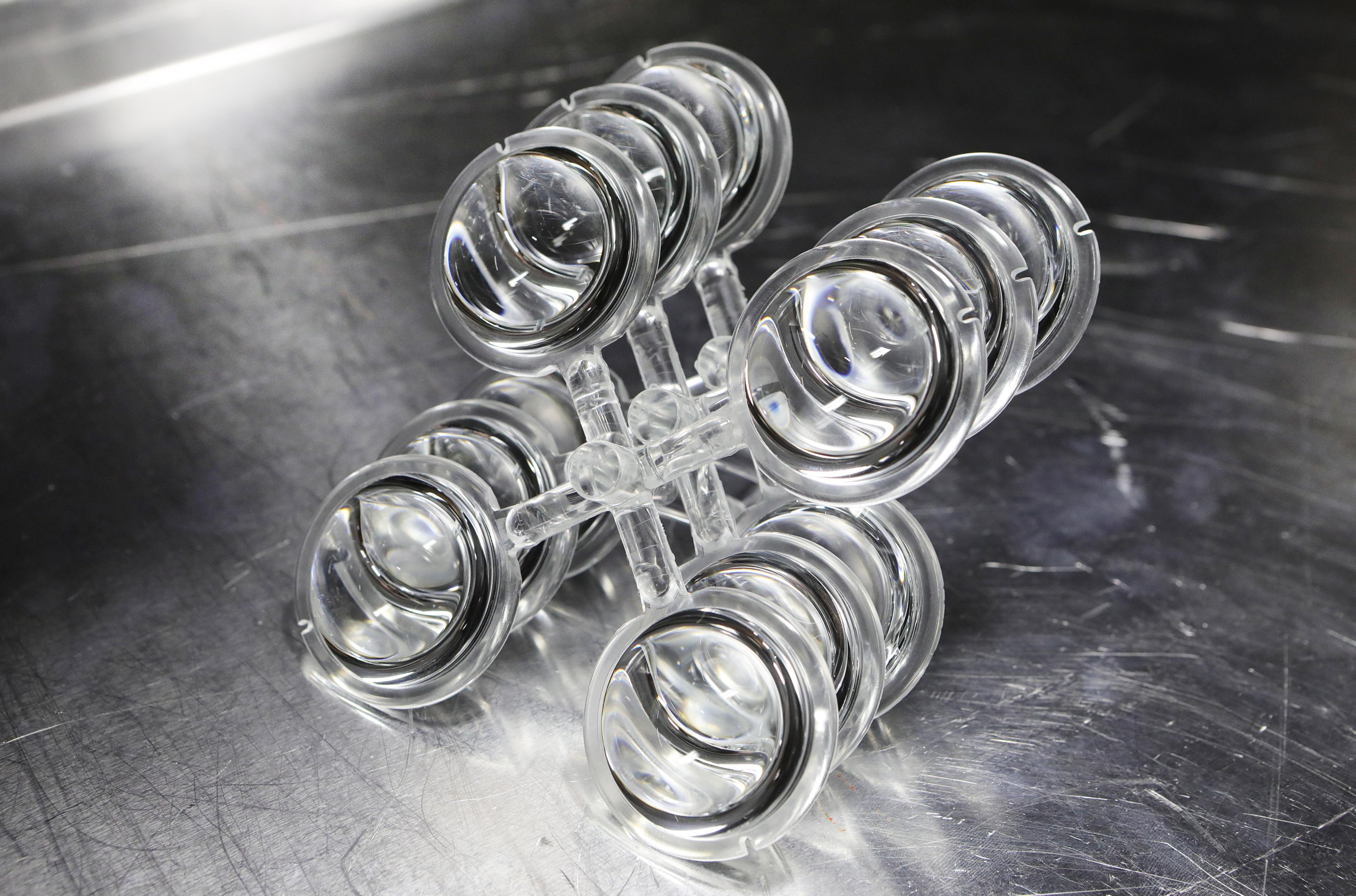
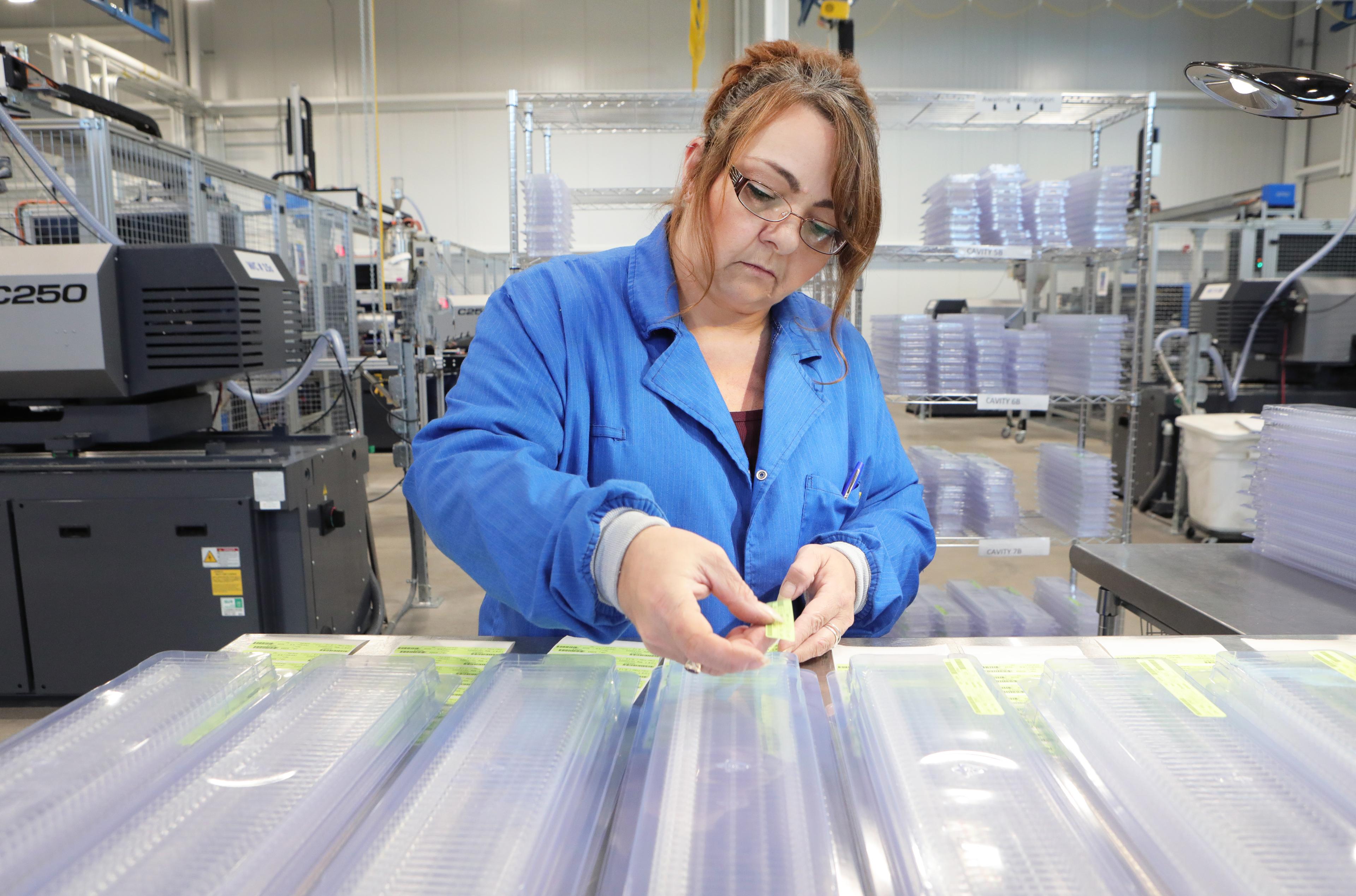
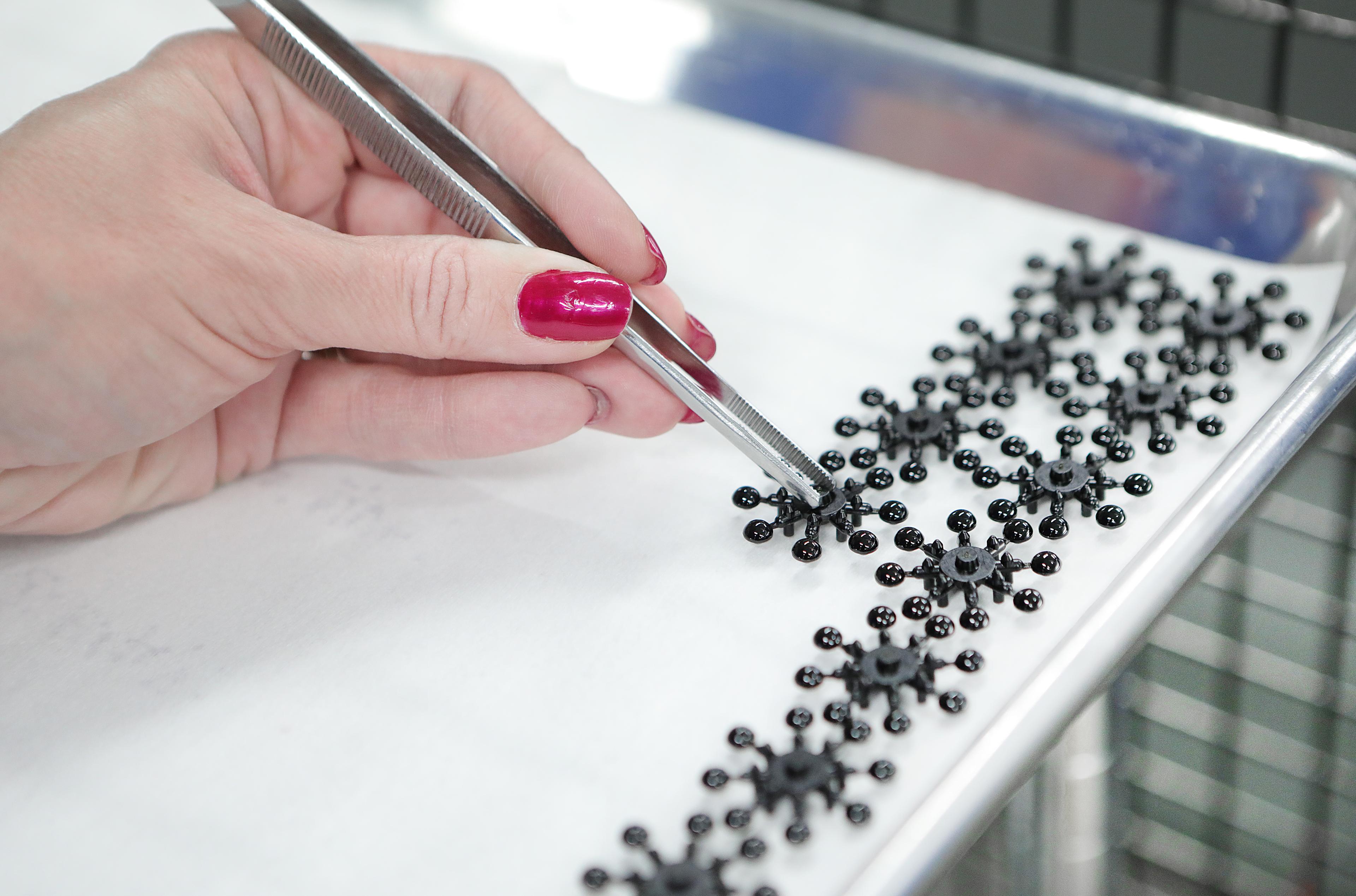
An often-overlooked but extremely important final step is the handling and packaging of the finished product. Optics, in general, are delicate, and plastic optics present even more concerns due to their susceptibility to abrasion. Handling of the optic must be considered from the time the press opens through inspection and packaging. If the optic will be incorporated into an assembly prior to shipment, handling during the assembly process must be addressed as well. We have extensive experience handling and packaging plastic optics and optical assemblies. This experience is the baseline for ensuring the handling and packaging process that will see the customer’s components and assemblies are delivered safely every time.